

✓ Verified July 2026: I re-checked the milk-to-espresso ratio and the key differences below. They're still accurate and reflect how most cafés prepare an espresso and a latte. (See how I test)
- Jeffrey, Your Dream Coffee
If you drink coffee at all, you already know the espresso and the latte; they're two classics that show up on just about every café menu.
But do you actually know what sets these two apart? And which one is better for you?
Key takeaways
- Verdict: Espresso and a latte are not interchangeable: an espresso is a concentrated 1 to 2 oz shot with bold, bitter notes, while a latte wraps that same shot in 6 oz of steamed milk and a thin layer of microfoam for a smoother, milder, naturally sweeter cup.
- Caffeine: A single-shot latte and a single espresso carry the same 68 mg of caffeine, since the milk adds volume, not caffeine. Ask for a doppio base and that rises to 128 mg.
- Calories: A plain espresso has zero calories. A latte made with whole milk adds roughly 110 calories per 8 oz serving, before any syrup or sugar.
- Watch out: A latte is not automatically sweetened, and café versions often arrive plain. The milk softens bitterness and adds a mild natural sweetness, so taste before reaching for the sugar.
- Best for: Choose espresso when you want full coffee intensity in two sips. Reach for a latte when you want to linger over something creamy and mild, or explore milk options with the best milk for frothing.
In this article, I'll walk you through how espresso and latte really compare, from strength to sweetness to calories.
By the time you're done, you'll know both drinks well enough that your next order won't feel like a guess.

Espresso vs. Latte: How do they differ?
Before we get into the details, here's a quick overview of the main differences:
| Comparison: | Espresso: | Latte: |
| Which coffee? | A single serving of coffee | One espresso shot |
| Milk used? | No milk used | Yes, 6 oz (0.18 l) |
| Flavor notes | A smoky, complex, and bittersweet flavor | Slightly sweet, creamy, and well-rounded flavor |
| Caffeine content | 68mg of caffeine | 68mg of caffeine |
| Number of calories | Virtually no calories | 110 calories |
| Any toppings? | Has a nice crema on top | Milk foam topping |
| Add-in used? | Sweetener of choice | Sweetener of choice |
Now that you've seen the highlights, let's go through them one by one:
Is espresso stronger than a latte?
Espresso is the stronger drink, no contest, and the reason is simple.
A latte starts from that same espresso, but it adds 6 ounces of steamed milk, and that milk makes up most of what ends up in your cup.
Once you see how each one is built, the difference in strength makes sense.
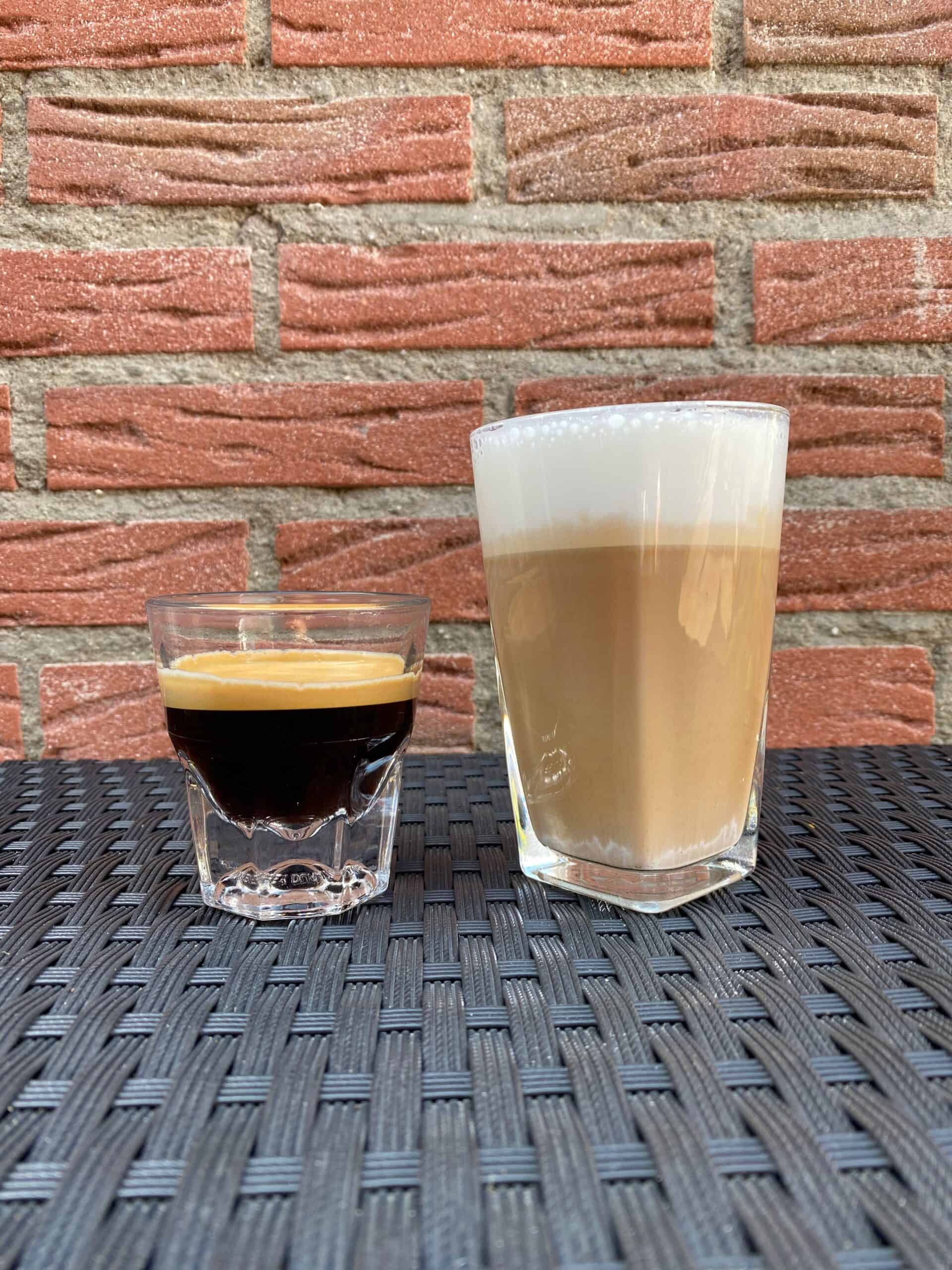
An espresso is a small, concentrated shot of coffee, usually around 1-2 fl oz (about 30-60 ml), depending on whether you pull a single or double shot:

Nothing else goes in, so what you taste is pure, concentrated coffee with all its natural flavor and aroma intact.
A latte takes that same concentrated shot of espresso and wraps it in 6 ounces (180 ml) of steamed milk with foam on top:

All that milk softens the punch and mellows the flavor, which is exactly what you want if you like your coffee on the milder side.
Which is sweeter, an espresso or a latte?
A plain latte isn't sweetened for you; plenty of people stir in sugar or flavored syrup, but that part is completely optional.
Even so, a latte usually tastes sweeter than a straight espresso, because the milk rounds off the bitterness and brings a gentle sweetness of its own.
Espresso on its own tastes barely sweet at all; it's just too concentrated and too bitter for that.

Add milk and you cut those bitter notes right back, so you end up with a smoother, more balanced cup that has less bite and a touch more sweetness.
The steamed milk also gives you that creamy texture, which mellows the coffee's acidity while still letting its natural flavor through.
That's why a latte can taste naturally sweeter, even before you reach for any sugar or syrup.
How many calories are in an espresso vs. a latte?
The calorie gap between the two really comes down to the milk and whatever else you add.
A plain espresso shot barely registers, since it's nothing but brewed coffee. In a latte, almost all the calories come from the milk (and any syrups, sugar, or cream you add).
For a single 8-ounce serving, a latte made with whole milk usually lands around 110 calories, while an espresso has zero.
Order that latte from your local café, though, and it may come loaded with cream or flavored syrups, which pile on extra fat and sugar in a hurry!
Is there a difference in caffeine content?
An espresso shot has 68mg of caffeine, and so does a single-shot latte. So even though these are two very different drinks, the caffeine works out exactly the same.
The only real difference is the size of the cup; an espresso shot is usually 1-2 ounces, while a regular or grande latte runs about 8-16 ounces.
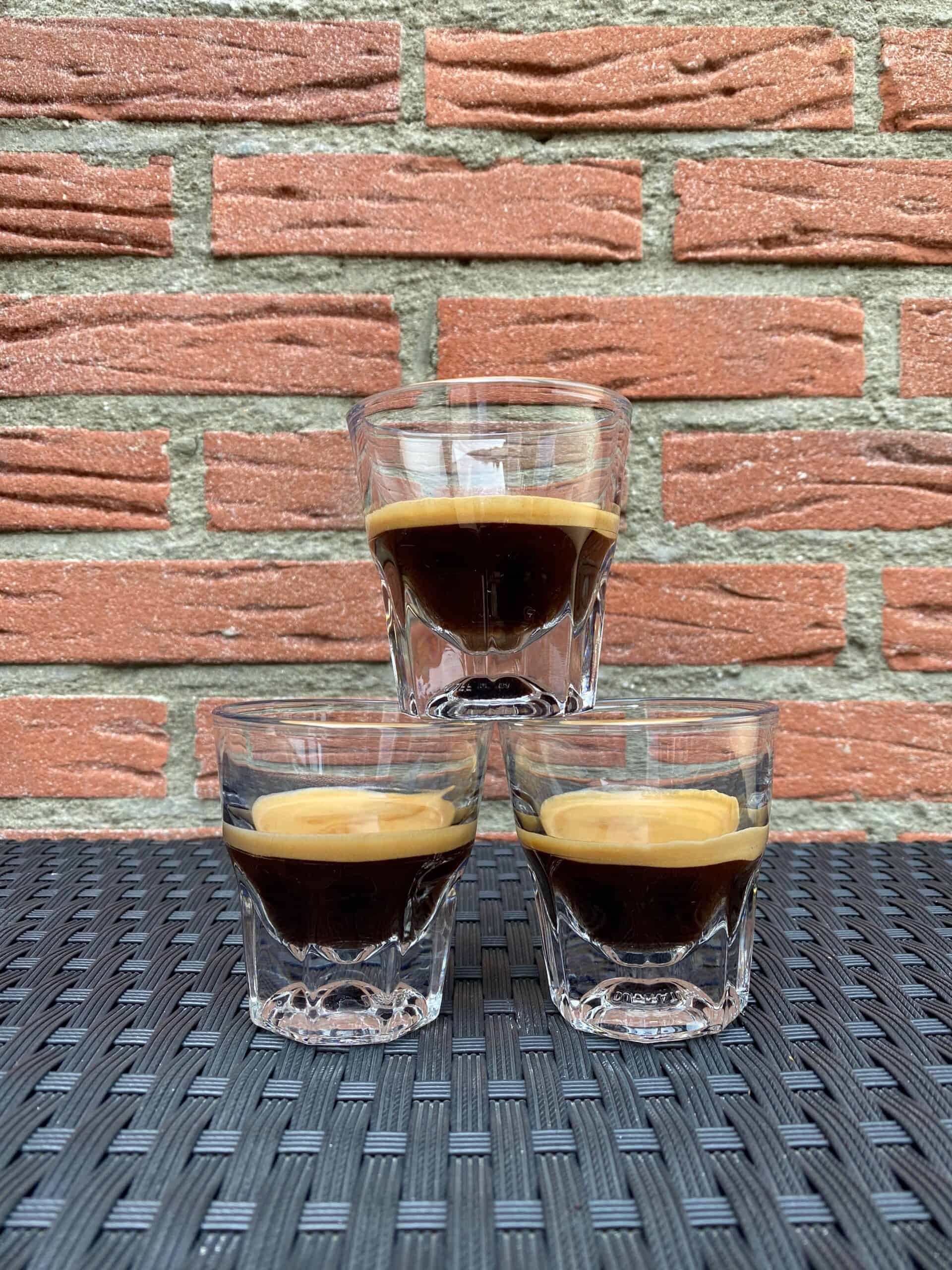
Some coffee shops will build your latte on a doppio espresso (double espresso), which pushes the caffeine content to 128mg and makes it stronger than a single espresso shot.
Which is better, an espresso or a latte?
There's really no right or wrong answer here.
It comes down to what you're in the mood for and the kind of coffee moment you're after.
An espresso is a concentrated shot with intense flavor that packs a punch, and it's served in a much smaller cup than most coffees.

As a rule, espresso is the darker, bolder, more full-bodied drink, with real bitter notes, while a latte comes out sweeter thanks to the milk and any sugar you add.
A latte is built on that same espresso, just with 6 oz of steamed milk folded in.
That milk-to-espresso ratio is what makes it so smooth, with flavors that stay strong but mellow.
The natural sweetness of the milk also softens the sharper edges you'd taste in a straight espresso shot.
If you're still not sure which one is for you, here's my rule of thumb:
- Order an espresso if you love a strong coffee flavor you can finish in one or two slurps.
- Go for a latte if you prefer a milder coffee you can savor while you sip it slowly.
Personally, my go-to is an espresso, since I love that more intense flavor. But I'll still reach for a latte every now and then.
Related coffee comparison articles
Curious how an espresso and a latte stack up against other coffees?
Great! Have a look at the articles below for more coffee comparisons:
- Cappuccino vs. Latte vs. Macchiato
- Espresso vs. Cappuccino
- Flat White vs. Latte
- Espresso vs. Coffee
- Breve vs. Latte
And to compare more coffees, visit the coffee comparison hub!
Conclusion
So there you have it: espresso and a latte come down to a few key differences.
The big one is strength; espresso gives you concentrated flavor, while a latte turns creamy and mild once the steamed milk goes in.
Espresso also carries a bigger aroma, which comes from the high pressure used to pull the shot.
Both drinks taste great in their own way, and which one wins really depends on you.
Whichever you pour next, I hope it's exactly the cup you were after!


