Flat whites and lattes: two delicious espresso beverages that have been enjoyed for a long time, yet remain often confused for one another.
If you, too, have found yourself questioning which is best suited to your taste buds, look no further!
Quick Answer: What is the difference between a flat white and a latte?
The main difference between a flat white and a latte lies in the type of milk used and the ratio of coffee to milk. Flat whites are made with microfoam milk and use more espresso, whereas lattes are made with steamed milk and a layer of milk foam.
In this article, we will explore the differences between flat whites and lattes in-depth, their unique flavor profiles, and their ingredients.
So come along as I break down everything you need to know about these popular coffee drinks, so that by the end, you can finally decide whether a flat white or latte should be your go-to order at the cafe.
Let's begin!

Flat White vs. Latte: How do they differ?
Before getting into the details of these delicious espresso-based drinks, you can have a look at all the differences in this overview:
| Brew Variable | Flat White | Latte (Caffè Latte) |
| Espresso base (typical) | Typically made with two espresso shots (often described as using more espresso than a latte) | Typically made with one espresso shot, but can also be made with two shots depending on the café/size |
| Milk preparation | Steamed whole milk aerated into silky microfoam (very small bubbles) | Steamed milk that's less aerated than a flat white, with a larger amount of foam on top |
| Foam topping | Less airy foam and a light microfoam topping that's easy to drink | More foam on top; the foam is firmer and tends to stay on the drink while you drink it |
| Milk amount (relative) | Uses slightly less milk | Uses more milk |
| Espresso-to-milk balance | More espresso-forward due to more espresso and less milk | More milk-forward (more milk softens the espresso more) |
| Taste outcome | Smooth with a slight bitterness; more intense espresso flavor but not overpowering due to the silky microfoam | Creamy and milk-heavy; typically slightly sweeter and milkier in taste |
| Caffeine (typical) | About 136 mg (two espresso shots at ~68 mg each) | About 68 mg with one shot, or up to ~136 mg if made with two shots |
| Calories (homemade, whole milk) | Smooth with a slight bitterness; more intense espresso flavor, but not overpowering due to the silky microfoam | About 110 calories |
As you can see, these drinks use the same ingredients, but their preparation differs, resulting in a distinct-tasting drink.
Now, let's get in-depth about the differences:
What is the difference in milk preparation?
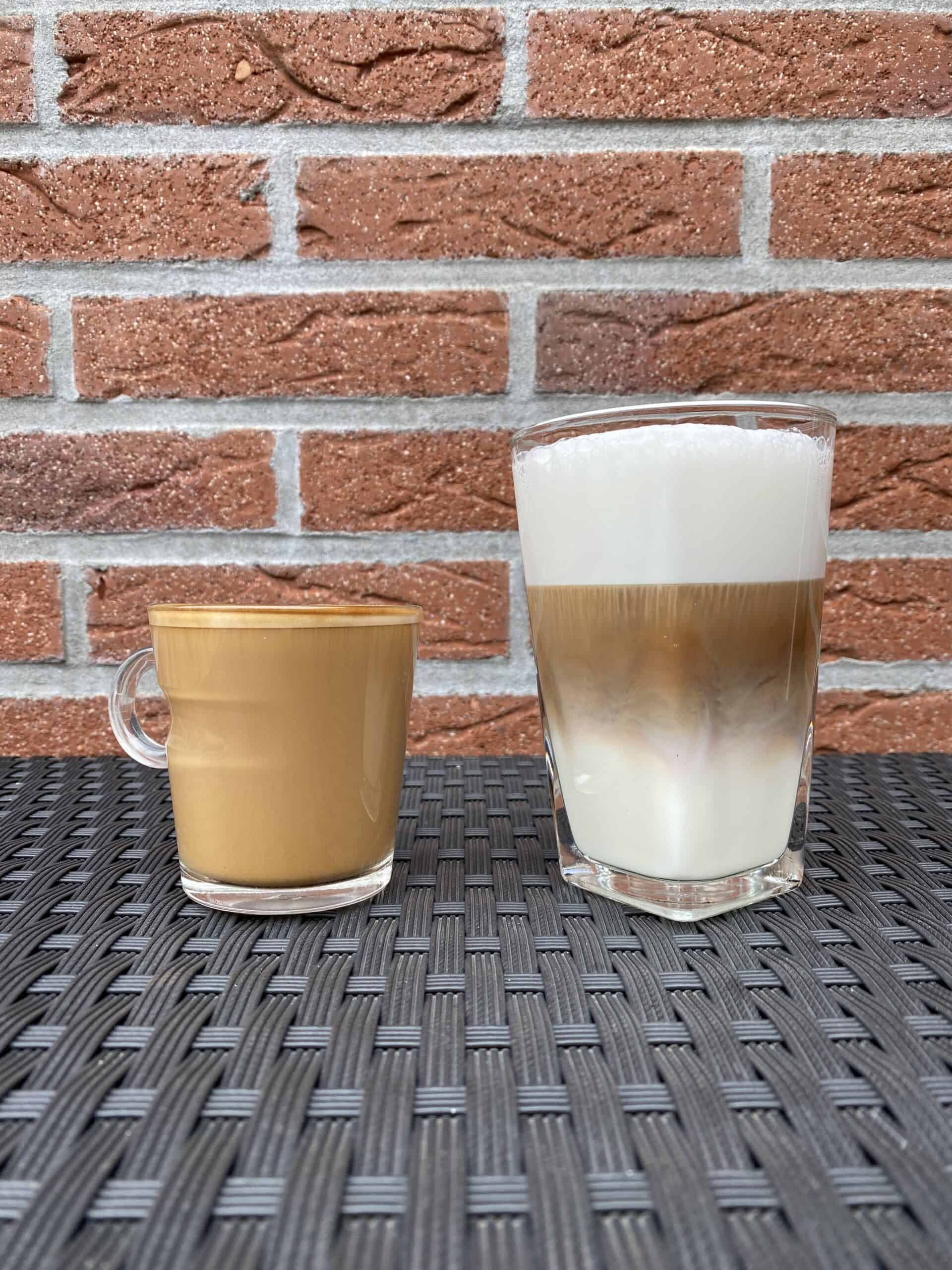
A flat white is usually made with steamed whole milk that has been aerated into a "microfoam" consistency, meaning that the foam bubbles are extremely small and, in turn, give the flat white its signature smooth texture.
A latte is typically made with steamed milk that is not as aerated as it is for a flat white, resulting in a creamier texture than a flat white. It does, however, come with a larger amount of foam on top.
The foam on top of a latte is a lot firmer and will stay on the drink while you drink it.
I usually like to stir a bit of the milk foam into my latte for a better experience.
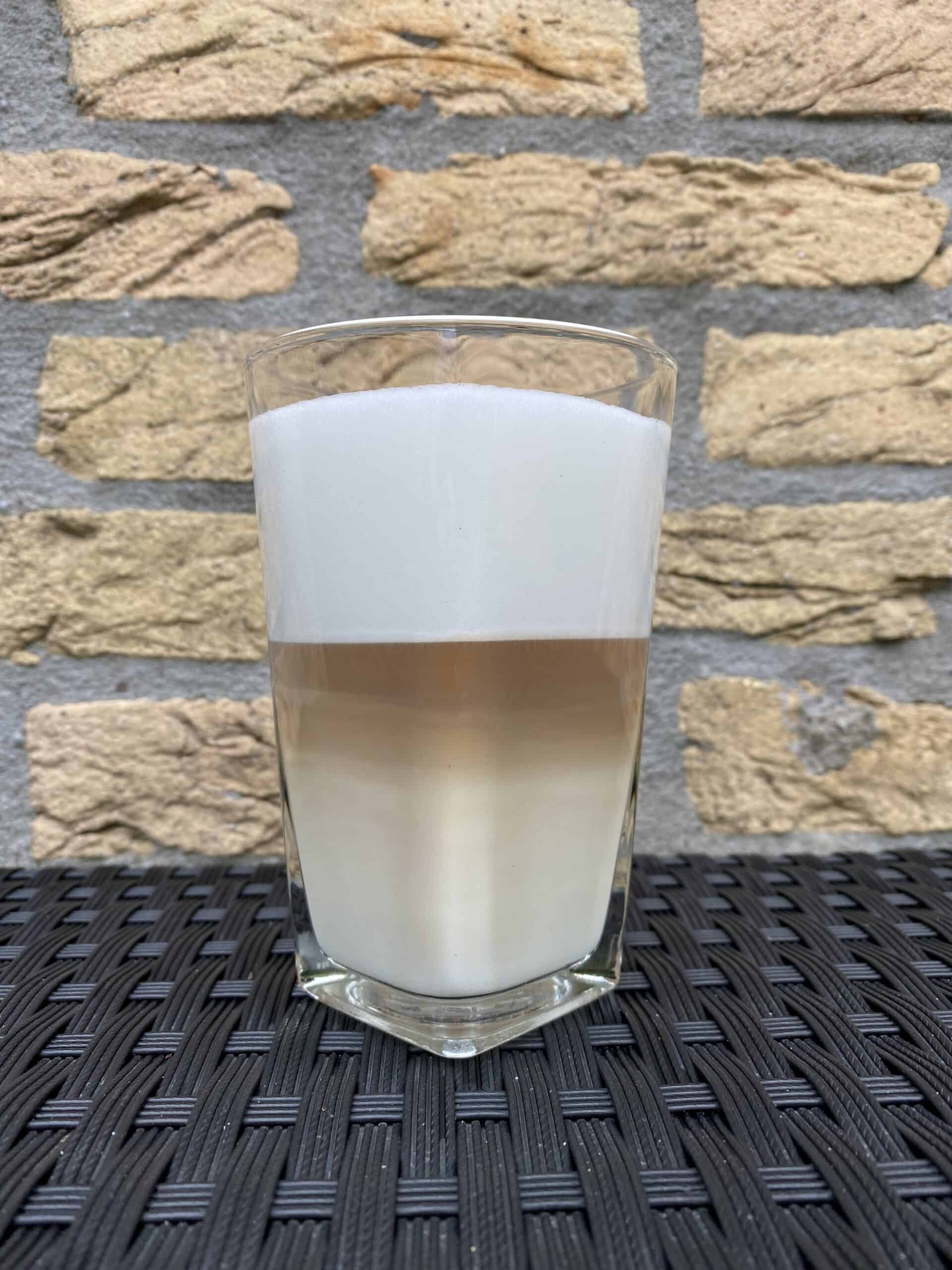
On the flat white, the milk foam is easily drinkable, and I find that it doesn't need to be stirred before drinking.
What is the flavor difference between a flat white and a latte?
The flavor difference between a flat white and a latte is subtle but noticeable. A flat white is essentially a small latte with less foam on top and more espresso.
The preparation of both drinks starts in the same way: by steaming milk for the espresso shot.

The difference lies in the amount of foam added and its texture.
With a latte, more foam is added to create an extra creamy texture and fuller taste.
In contrast, a flat white has less airy foam, resulting in a more intense espresso flavor with only creamy microfoam that coats the tongue.
Flat whites typically contain twice as much espresso as lattes and use slightly less milk.
This gives it an intensely strong coffee taste that isn't overpowering due to the smoothness of the silky microfoam combined with creamy milk.
Lattes also tend to be slightly sweeter due to the use of a more fluffy foam, as opposed to microfoam, which can provide enough sweetness on its own.
Which is stronger? A flat white or a latte?
Flat whites generally have a more concentrated flavor than lattes due to the smaller quantity of milk used when making one and because they use more espresso than lattes.

You can also make a latte with two espresso shots, which will then be comparable to a flat white.
However, because a latte still uses more milk in its preparation, it'll always have a slightly milkier taste.
Most people also compare the strength of a product to its caffeine content.
A flat white does contain more caffeine than a latte typically, but more on this below:
How much caffeine is in a flat white vs. a latte?
When considering the amount of caffeine in a flat white versus a latte, it's essential to examine the components of each beverage.
A flat white typically contains two espresso shots, each with approximately 68mg of caffeine, for a total of around 136mg per flat white.
On the other hand, a latte typically uses just one shot of espresso but can also be made with two espressos, totaling around 68-136mg of caffeine, depending on the size.
I always like to make my latte with just one espresso shot and the flat white with a doppio espresso because I like the taste better that way.
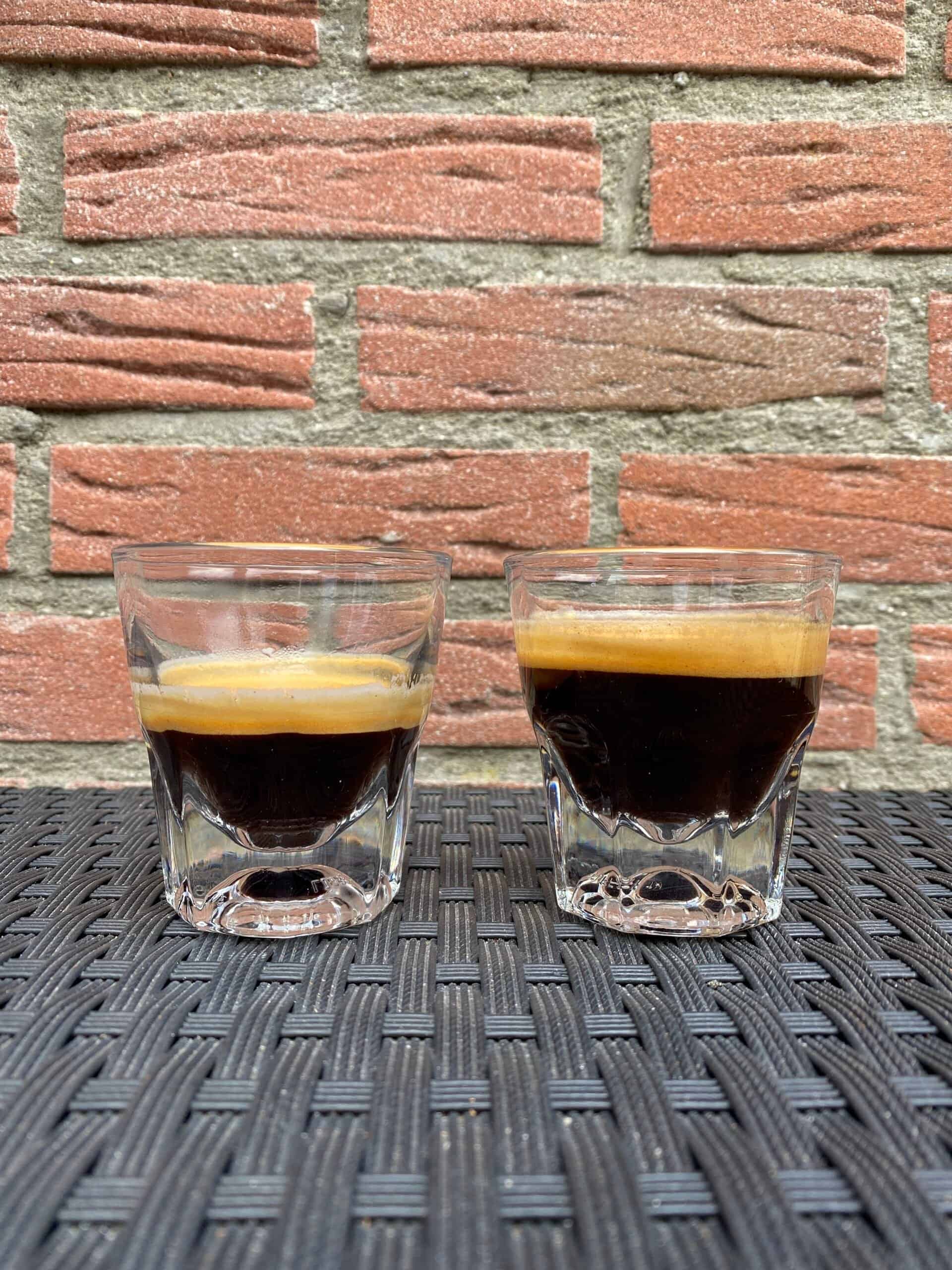
In addition to these differences, it's also worth noting that some cafes may use more or less coffee than others when preparing either type of drink.
How many calories are in these drinks?
A homemade flat white has 68 calories, while a latte has 110 calories. This is calculated when using whole milk.
If you opt for a non-dairy alternative such as almond or oat milk, you'll have fewer calories per serving.

Another factor that determines the calorie count of your chosen beverage is whether it contains any added sugars or syrups.
There are numerous options available for sweetening your coffee at home or at your local coffee shop.
Generally speaking, though, a latte will have a few more calories than a flat white due to its larger size and higher milk quantity.
Which is better? A flat white or a latte?
When it comes to choosing between a flat white and a latte, there is no one-size-fits-all answer.
The decision ultimately comes down to personal preference and what type of coffee experience you are looking for.
If you're not quite sure after reading through the article, I'd suggest the following:
- If you're looking for an intense yet smooth coffee experience with minimal added flavors, then a flat white might be for you.
- However, if you prefer something lighter-bodied yet still packed with flavor, opt for a latte.
Ultimately, both coffees offer unique experiences that cater to different tastes, so don't be afraid to try out each option separately before deciding which one suits you best!
And remember, you can always order both coffees with a sweetener if they're too strong for your taste.
Related coffee comparison articles
Are you wondering how the flat white and latte compare to other coffees?
Great! Check out the articles below for more in-depth coffee comparisons:
- Cappuccino vs. Latte vs. Macchiato
- Flat White vs. Cappuccino
- Frappuccino vs. Latte
- Mocha vs. Latte
- Latte vs. Coffee
And to compare more coffees, visit the coffee comparison hub!
Conclusion
As you can see, coffee drinks vary significantly in calories, caffeine content, and flavor profile.
Regardless of the option that you choose, a flat white or a latte, the perfect cup of coffee is a matter of personal preference.
Therefore, if you're looking for something sweet and creamy, the latte may be the right choice for you.
On the other hand, if a more robust flavor is what you desire, then a flat white might be your best pick.
Whether it's to start your morning or to give yourself an afternoon boost, both of these classic caffeinated beverages can add energy and warmth to your day.