

Coffee drinkers everywhere love lattes.
Lattes offer the perfect blend of sweet milk and strong coffee, making them the perfect pick-me-up during the day.
However, lattes can be expensive at coffee shops, so how do you brew one at home?
Quick Answer: What is a latte?
A latte is a coffee drink made with espresso and steamed milk. The latte originates in Italy and is made either hot or iced.
To brew a latte at home, you'll need an espresso maker (preferably one with a milk steamer) and a milk frother. While whole milk works best in lattes, any milk will do.
The rest of this article will discuss what a latte is, and the differences between the latte and other similar coffee drinks.
Let's go more in-depth now!

What makes a latte a latte?
If you're not super knowledgeable about coffee drinks and their differences, you probably don't know what makes each drink different from the other.
Lattes are often confused with cappuccinos, which are similar coffee drinks yet distinct from each other.
The main differences between coffee drinks are the method of preparation and the amount of milk used.
Latte is a shortened form of the Italian word caffè latte, which translates to "coffee and milk."
A hot latte typically consists of espresso, steamed milk, and foamed milk.
It consists of three parts: 1/3 espresso, 2/3 steamed milk, and is topped with a layer of foamed milk.
While some people might choose to add extra espresso shots, the amount of milk typically stays the same.
An iced latte is made a little differently. While it still features espresso, it's mixed with chilled milk instead of steamed milk and isn't topped with foamed milk.
Many people also prefer to add various flavors to their iced lattes.
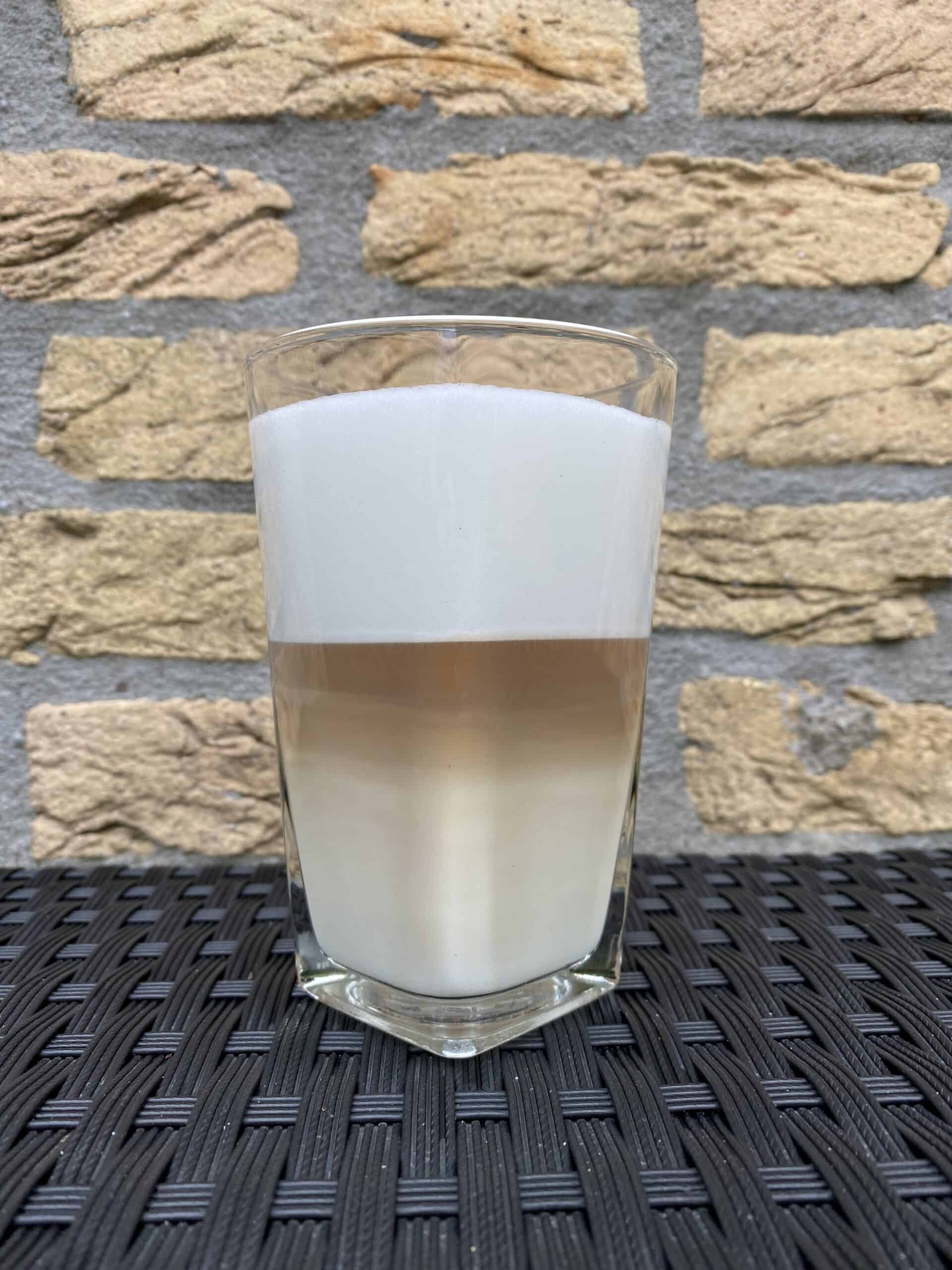
Difference between a latte and a cappuccino
Now that you know what makes up a latte (1/3 espresso, 2/3 steamed milk, and topped with foam), knowing how that differs from a cappuccino is essential.
Since they're so similar, it's easy to accidentally make a cappuccino when you meant to make a latte.
A cappuccino consists of one-third espresso, one-third steamed milk, and one-third foam.
Making a latte and a cappuccino requires the same ingredients, and a cappuccino is only slightly different from a latte.
However, this difference can significantly alter the taste. Have a look below for a side-by-side view of the two:

Are you interested in learning more about the differences between these drinks?
Then, you can find more information in this comparison article!
How do you brew a latte at home?
While lattes are delicious and can be a great start to your day, buying one from a coffee shop every day adds up.
Therefore, knowing how to brew your own latte at home can save you both time and money.
To brew a latte at home, you need to invest in an espresso machine that is capable of steaming milk. After making the espresso, add it to a cup with steamed milk.
Then, use a milk frother to froth a small amount of milk to top it off. The latte should be 1/3 espresso and 2/3 steamed milk.
Below, I'll outline everything you need to know to brew a latte at home, including the necessary materials and ingredients.
I'll also suggest different options for espresso machines.
1. Have the correct equipment
While technically, you can make a latte without an espresso machine, having an espresso machine makes the process so much easier and quicker.
Without an espresso machine, the best way to make espresso for a latte is to use a French press, and the espresso typically won't be as strong.

Therefore, investing in a quality espresso machine is ideal. I recommend checking out the Chefman 6-in-1 Espresso Machine.
This espresso machine is specifically designed to make cappuccinos and lattes with just the push of a button.
Therefore, this machine is fantastic for those just beginning their latte-making journey.
The Chefman gives you the option for a single or double shot of espresso, and it comes with a built-in milk frother, so all you have to do is add water and milk to the respective containers.
While the price may be relatively expensive to some (but still on the low side compared to espresso machines), it will save you money in the long run.
However, if you'd rather spend less money and use a French press to make your espresso, I recommend the Utopia French Press Espresso.
Steaming milk can be done in the microwave or on the stove. However, to top off a latte with foamed milk, you'll need a milk frother.
The FrothBlast Milk Frother is handheld, so it's small and portable.
You can check out my guide on how to froth milk here. Over there, I'll go over six ways you can froth milk at home!
2. Have the correct ingredients
As I've already discussed, you'll need a shot of espresso, steamed milk, and foamed milk to make the proper latte.
Lattes are traditionally made with whole milk, as steamed whole milk has a smooth and creamy consistency that is ideal for lattes.
When it comes to the milk foam on top, non-fat or skim milk (due to the thinner consistency) makes the most bubbly froth and is a lot easier for those just starting out.

Because different kinds of milk have varying thicknesses and flavors, you'll notice that whole milk has one of the thickest foam capabilities.
Despite this, any milk you choose will work fine for a latte, even if some kinds of milk aren't as creamy as others.
Therefore, depending on your preference for foam consistency, you'll know what type of milk is best for frothing.
Are you still looking for the perfect coffee beans for your latte journey at home?
Check out my recommendations here for the best coffee beans for lattes!
3. Make the latte
After you've gathered the right ingredients and you have everything ready, making the latte is easy.
As there are only three ingredients involved, all you have to do is combine them.
After making an espresso shot, either in an espresso machine or a French press, pour the steamed milk on top and then add the foam.

Although many people enjoy hot lattes, iced lattes are becoming increasingly popular.
Making an iced latte involves preparing a shot of espresso and, preferably, chilling the espresso shot.
After adding a chilled espresso shot to ice, you add your milk of choice as well as any sweeteners.
You can also make your iced latte with cold foam, which is my preferred method.
Cold foam can be easily made at home and will add a bit more texture to your iced latte.
Have you made cold foam at home before? If not, you can check out this guide about five ways of doing so!
How do you steam milk for a latte?
Don't worry if you don't have a milk steamer; you can still steam milk the old-fashioned way.
While most avid coffee drinkers use milk steamers or have one connected to their coffee machines, there are alternative methods for obtaining steamed milk.
To steam milk for a latte, you can use a milk steamer, steam it on the stovetop, or use the microwave.
When using the microwave or stovetop, use a thermometer to test the milk until it reaches about 158°F (70°C).

Latte beginners frequently asked questions
For people who are just beginning to experiment with making lattes or other coffee drinks, or even those who aren't sure what to order at a coffee shop, there are numerous questions since there are so many drinks similar to lattes.
Similarities include cappuccinos and macchiatos.
Therefore, here are some frequently asked questions regarding lattes:
Is a latte stronger than coffee?
Because espresso is stronger than coffee, many people assume lattes will be stronger or have a higher caffeine content, as they're made with espresso.
However, this isn't always the case.
A latte is not stronger than coffee. As a latte is typically made with only one espresso shot, a cup of regular coffee technically has more caffeine, making it stronger.
However, adding two espresso shots to a latte will significantly increase its caffeine, making it stronger.
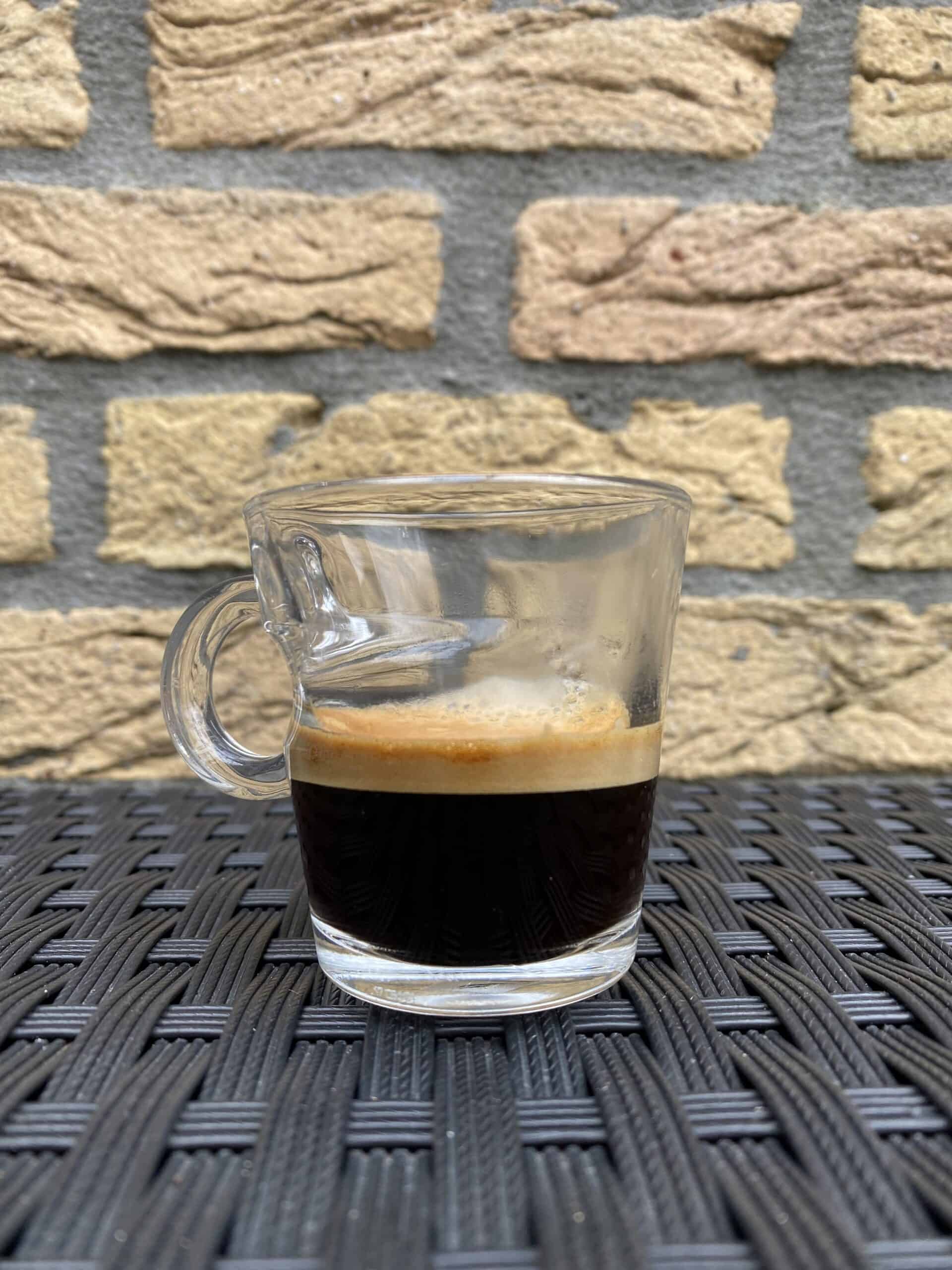
Of course, this also depends on the type and size of coffee in comparison. However, in terms of a regular-sized coffee, it's stronger than a latte.
Related article: Latte vs. Coffee: How Do They Differ and Which Is Better?
Is a latte sweet?
With all of the varying coffee drinks and the many types of sweeteners you can add, the term "sweet" is debatable when it comes to coffee.
One person's definition of sweet might not be the same as someone else's. However, with lattes, many coffee lovers agree on their sweetness.
Lattes are typically sweet because of the layer of milk on top of the espresso. With hot lattes, adding other sweeteners or syrups isn't common like it is with iced lattes.
Therefore, iced lattes are often sweeter than hot lattes, depending on the added sweeteners.
What is the difference between a mocha and a latte?
Mocha and lattes, like lattes and cappuccinos, are very similar.
They have most of the same ingredients, and when it comes to mochas, the ingredients are distributed in a manner similar to lattes. However, there is one slight difference.
Mochas are made similarly to lattes, using steamed milk and a layer of foamed milk.
However, mochas have chocolate sauce added, giving them a sweeter, chocolatey flavor.
Therefore, the main difference between a mocha and a latte is that a mocha has the added sweetness of chocolate sauce.

Mochas are better suited for people who prefer sweeter coffee drinks, as the chocolate sauce adds sweetness to the drink.
Both drinks are made with the same amount of espresso. Therefore, with a mocha, you'll have the same caffeine content but with a sweeter flavor.
What is a blonde latte?
If you're a coffee (or latte) drinker and you've wondered what a blonde latte is and how it's different, you're not alone.
While it's often seen on the menu, especially at Starbucks, not many people know what it is or how it differs from a regular latte.
A blonde latte is a latte made with blonde espresso, which is lighter and smoother than regular espresso. Blonde lattes, although sweeter, tend to have higher caffeine content.
One ounce (29 ml) of blonde espresso contains 85 mg (0.0029 oz) of caffeine, whereas traditional espresso contains 75 mg (0.0026 oz).

Due to their higher caffeine content and sweeter flavor, many people enjoy blonde lattes.
However, not everyone loves their coffee to taste sweet, so it depends on a person's personal preference.
Learn how to make a blonde latte at home with this complete recipe!
What is the difference between a flat white and a latte?
Both a flat white and a latte are made up of espresso and steamed milk. So, while many people may think they're the same, they have some key differences.
A flat white and a latte are made with the same ingredients but differ in size. A flat white is typically only five to six ounces (147 to 177 ml), whereas a latte is anywhere from eight to ten ounces.
A flat white is also topped with a thin layer of steamed milk, which contrasts with the latte.
Since a flat white is typically smaller (although this may vary depending on the location), the drink is stronger than a latte.
The drinks have the same amount of espresso but different amounts of milk. Therefore, the espresso's taste will be significantly stronger.
What is a piccolo latte?
Piccolo lattes are not the most common drink. Therefore, you won't find it on the menu at every coffee shop you visit.
However, piccolo lattes are nice and straightforward, and if you love the strong flavor of coffee, they may become your next favorite.
A piccolo latte is a small latte and is usually served in a three to four-ounce (88 to 118 ml) glass.
A piccolo latte consists of one shot of espresso combined with two ounces of steamed milk. As the drink is smaller than the average latte, a piccolo latte has a stronger taste.
Learn how to make a piccolo latte at home using this easy-to-follow recipe.
Final thoughts
A latte is a delicious coffee beverage that originated in Italy.
Today, it's a standard coffee drink and is served both hot and iced, making it a year-round favorite of many.
However, a latte isn't the most unique coffee beverage, as many other coffee drinks are incredibly similar.
A latte is made up of 1/3 espresso, 2/3 steamed milk, and a layer of foamed milk on top. It's often compared to a cappuccino and macchiato.
Making a latte at home is easy with the right equipment, such as an espresso machine, milk steamer, and milk frother.


