

Coffee is one of the most commonly consumed drinks worldwide. One reason for its popularity is its caffeine content.
In this article, I'll discuss the caffeine content of different coffee drinks, including espresso, cold brew, and decaf.
Key takeaways
- Verdict: An 8-oz cup of brewed coffee contains 80 to 100 mg of caffeine. Roast, grind, brewing method, and water temperature all cause the number to shift.
- Size scales caffeine: A 12-oz cup averages 120 to 150 mg, a 16-oz cup 160 to 200 mg, and a 20-oz cup 200 to 240 mg. Coffee chains like Starbucks often run higher than these averages.
- Drink type matters: Espresso delivers 64 mg per shot in a small 30 ml serving. Cold brew reaches 250 mg per 8 oz because of its high coffee-to-water ratio and long steep time. Decaf is not caffeine-free, with a typical 8-oz cup at 2 to 15 mg.
- Roast watch-out: Dark roast has slightly less caffeine than light roast, but the difference is very small. Roast choice affects flavor far more than caffeine.
- Next step: Check the specific drink type and cup size rather than assuming all coffee is the same. A 20-oz cold brew and an 8-oz drip cup are a world apart in caffeine.
Let's go more in-depth now!

Average caffeine content by coffee size
The caffeine content of coffee drinks varies depending on the size of your cup. Here's a quick overview:
- 8-ounce (237 ml) cup = 80-100 mg of caffeine
- 12-ounce (355 ml) cup = 120-150 mg of caffeine
- 16-ounce (473 ml) cup = 160-200 mg of caffeine
- 20-ounce cup (591 ml) = 200-240 mg of caffeine
While these are the average amounts, it's wise to check the label of your favorite coffee drinks to ensure you know exactly how much you're consuming.
Coffee chains often exceed these averages. For example, Starbucks publishes the following caffeine amounts for brewed coffee sizes:
- Short (8-ounce) cup: 180 mg
- Tall (12-ounce) cup: 260 mg
- Grande (16-ounce) cup: 330 mg
- Venti (20-ounce) cup: 415 mg
This shows how much caffeine can vary even when the cup size looks familiar.
If you want exact numbers for specific Starbucks drinks, use my Starbucks caffeine tool here:
Caffeine in different types of coffee drinks
In addition to the size, the type of coffee can also affect the amount of caffeine you consume.
Here's a guide to help you understand the average caffeine content of some popular coffee drinks:
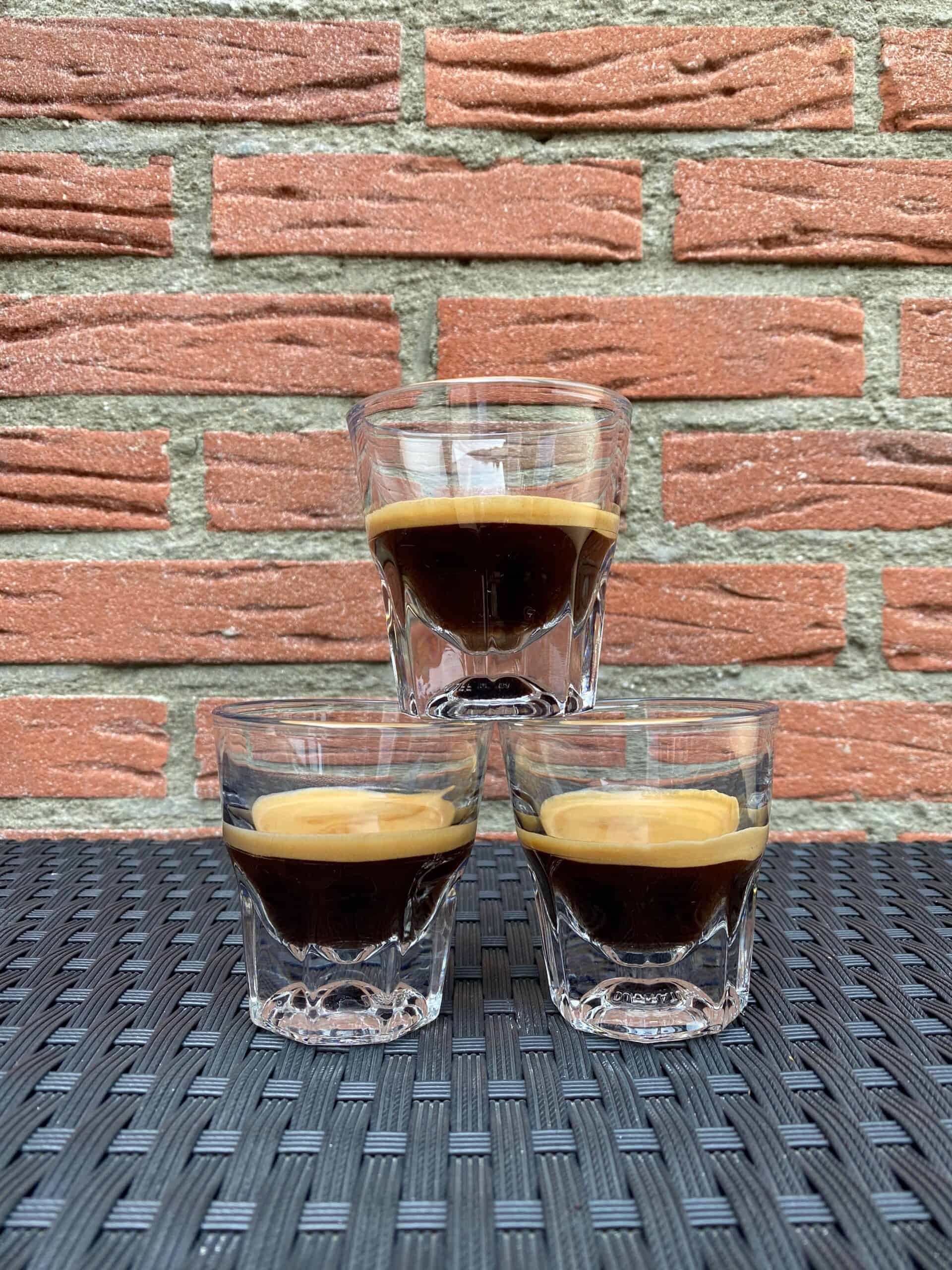
- Espresso: 64 mg per shot (30 ml)
- Cold brew: 250 mg per 8 ounces (237 ml)
- Latte: 64-128 mg per cup (240 ml)
- Mocha: 70-140 mg per cup (240 ml)
- Decaf coffee: 2-15 mg per 8 ounces (237 ml)
Again, the amount of caffeine in each coffee drink will depend on its preparation and size.
For example, a small drink with a shot of espresso may contain more caffeine than a large cup of decaf coffee.
Cold brew can stand out because recipes often use a relatively high coffee-to-water ratio and long steep times, which can increase caffeine in the final drink.
However, many people fall into the trap of assuming their caffeine consumption is within limits if they drink only decaf.
If you drink large amounts of decaf coffee, you still consume a lot of caffeine.
Additionally, the amount of caffeine in decaffeinated coffee varies by brand and brewing method, so it may be more or less than stated above.
Always check the label for the exact amount of caffeine.
Does decaffeinated coffee still contain caffeine?
Yes. Decaffeinated coffee still contains caffeine.
A typical 8-ounce (237 ml) cup of decaffeinated coffee contains 2 to 15 mg of caffeine, with an average of 12 mg.
That's far less than regular coffee, but it isn't zero. If you drink several large cups of decaf throughout the day, the caffeine can add up more than expected.
Do dark roasts contain more caffeine than light roasts?
The type of roast does affect the caffeine content of your coffee. Darker roasts tend to have slightly smaller amounts of caffeine than light roasts.
However, the difference between light and dark roast is usually very small.
If you're trying to regulate your caffeine consumption, don't rely solely on roast types.
The biggest influence on the roast is taste and flavor, so you can choose whichever you prefer without worrying about the caffeine content.

Daily caffeine: a commonly cited reference point
Many sources use 400 mg of caffeine per day as a general reference point for most adults.
That's often compared to roughly four cups of brewed coffee, although if you're drinking energy drinks or other caffeinated beverages, the amount of caffeine can add up quickly.

Conclusion
Coffee may seem simple, but caffeine levels can change quickly depending on the size, style, and preparation method.
An 8-ounce cup can be mild or surprisingly strong depending on how it's brewed.
Espresso looks intense, but it delivers caffeine in smaller doses, while cold brew quietly boasts some of the highest caffeine levels.
When you look at cup size, brew style, and drink type, you get a clearer idea of how much caffeine you're actually drinking with each cup, instead of relying on guesswork!


