

If you've ever wondered how a lungo differs from an espresso, it all comes down to how much water is used to extract the same dose of coffee, and how that changes the flavor, intensity, and caffeine content.
Key takeaways
- Verdict: Lungo uses the same dose as espresso but pulls more water through the same puck, giving a larger 2 oz (60 ml) cup against espresso's 1 oz (30 ml), with a lighter body and more roasty, bitter notes.
- Ratio and timing: Espresso brews at a 1:2 ratio in 25 to 30 seconds, while lungo runs a 1:3 to 1:4 ratio over 45 to 60 seconds from the same 18 to 20 gram dose.
- Caffeine: Espresso carries a baseline of 68 mg, and lungo extracts roughly 70 mg because more water runs through the same puck. Dose and bean type (Arabica vs. Robusta) move caffeine far more than switching between the two.
- Watch out for milk drinks: Espresso's shorter ratio gives enough intensity to punch through milk in a cappuccino, flat white, or cortado. Lungo is better suited to straight sipping.
- Best for: Choose espresso for concentrated flavor or milk-based drinks. Go lungo when you want a bigger cup from the same machine with a gentler, roasty edge. On Nespresso, the Original Line brews a lungo at 110 ml and the Vertuo brews a Gran lungo at 150 ml.
In this comprehensive breakdown, you'll learn about grams, in/out ratios, timing, grind, and caffeine in simple terms.
Let's get into it!
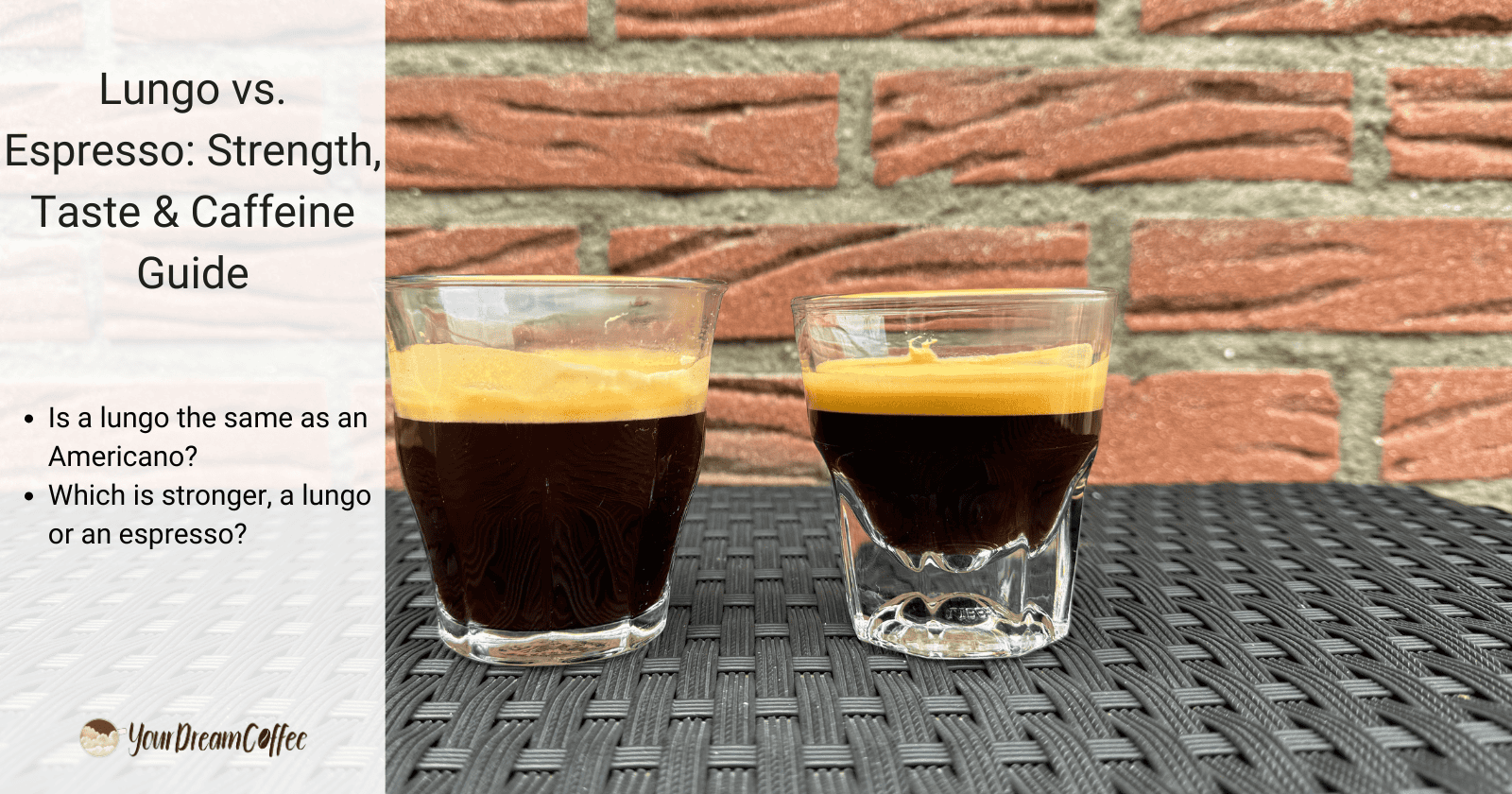
Lungo vs. espresso, how do they differ?
Before getting into the details of all the differences, you can check out the complete overview below:
| Comparison: | Lungo: | Espresso: |
| Typical dose | 18-20 grams | 18-20 grams |
| Total liquid out | 2 ounces (60 ml) | 1 ounce (30 ml) |
| Ratio | 1:3 to 1:4 | 1:2 |
| Brewing time | 45-60 seconds | 25-30 seconds |
| Grind size | Slightly coarser than espresso | Fine |
| Taste | Lighter body, more roasty/bitter flavors | Dense, sweet, concentrated |
| Caffeine content | Same or a bit more than espresso | 68mg of caffeine |
| Best for | Straight shots, cappuccino, flat white, or lattes | Bigger cup of coffee without adding water |
As you can see, there are several notable differences between these drinks. Now, let's dive into all the details so you can choose a new favorite!
What is an espresso?
Espresso is a small, concentrated coffee brewed by forcing hot water through a compacted puck of finely ground coffee.
A common baseline is 18 grams of ground coffee with 36 grams of coffee out. This all needs to happen within 25 to 30 seconds.
That 1:2 ratio is what gives espresso its syrupy feel and punch:
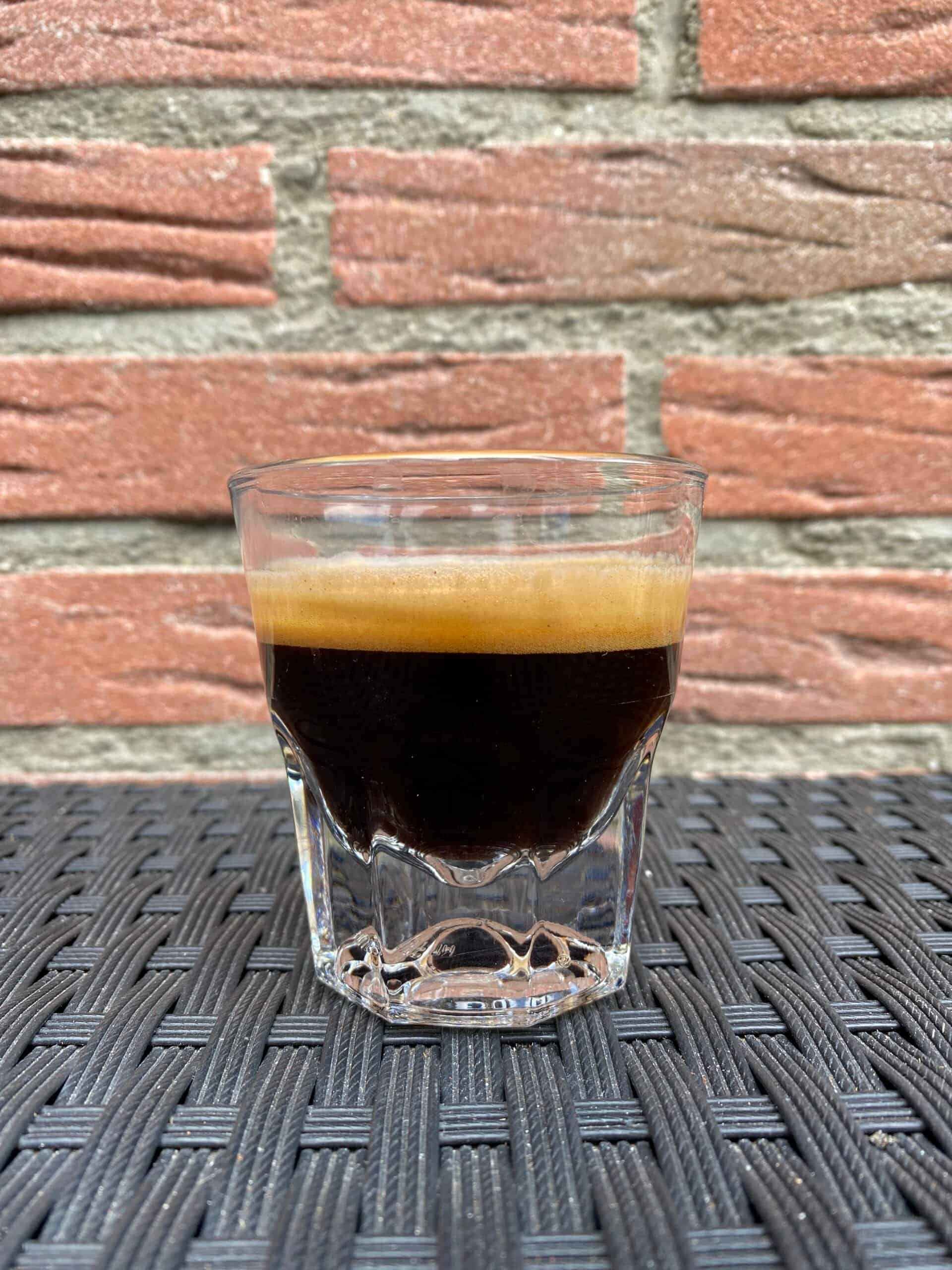
So what can you expect when you order or make an espresso at home?
- A lot of aroma and sweetness when well dialed
- Thick body and lingering finish
- Notes can range from fruity to chocolatey or nutty, depending on the beans and roast
What is a lungo?
"Lungo" means "long" in Italian. You use the same dose as an espresso, but run the shot longer to a higher beverage weight.
For example, 18 grams of coffee in is 60-70 grams out in 45 to 60 seconds.
You can grind slightly coarser so the shot doesn't choke and turn harsh. If you keep it the same, you'll have a more bitter lungo.

Here's what you can expect in terms of flavor:
- Lighter body and lower intensity than espresso
- More roasty/bitter notes as you push more liquid through the puck
- Simpler aromatics than a short espresso
Is a lungo the same as an Americano?
It's a common misconception that a lungo and an Americano are the same drink; however, they are very different.
As mentioned above, a lungo is brewed for a longer period using the same coffee puck as an espresso.
This results in a larger cup with a lighter body and a more roasty edge.
An Americano, on the other hand, uses a standard espresso first and is then topped with hot water to reach the desired cup size.
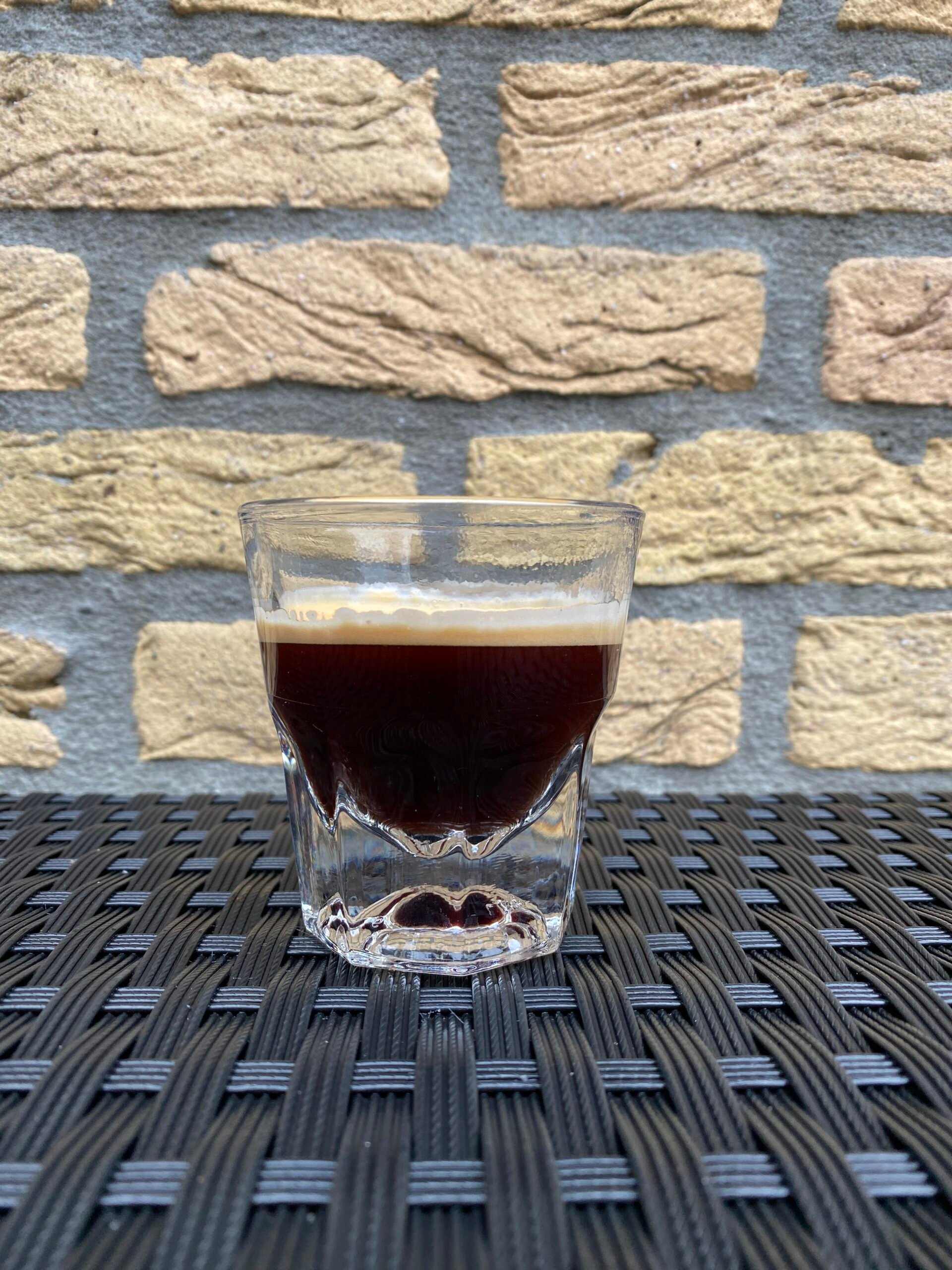
Because an Americano dilutes a finished shot, it keeps the espresso's cleaner balance.
It contains approximately the same amount of caffeine as the base espresso.
A lungo from the same dose may extract slightly more caffeine, but not by a significant margin.
What is the difference in caffeine?
Caffeine is primarily determined by the amount of coffee used (grams/dose) and the type of beans (Arabica vs. Robusta), rather than whether you pull an espresso or a lungo.
With the same dose and same beans:
- Espresso: a smaller cup, concentrated flavor, with a baseline amount of caffeine of 68mg
- Lungo: Slightly more total caffeine than that espresso because you run more water through the same puck and extract a bit more, roughly 70mg
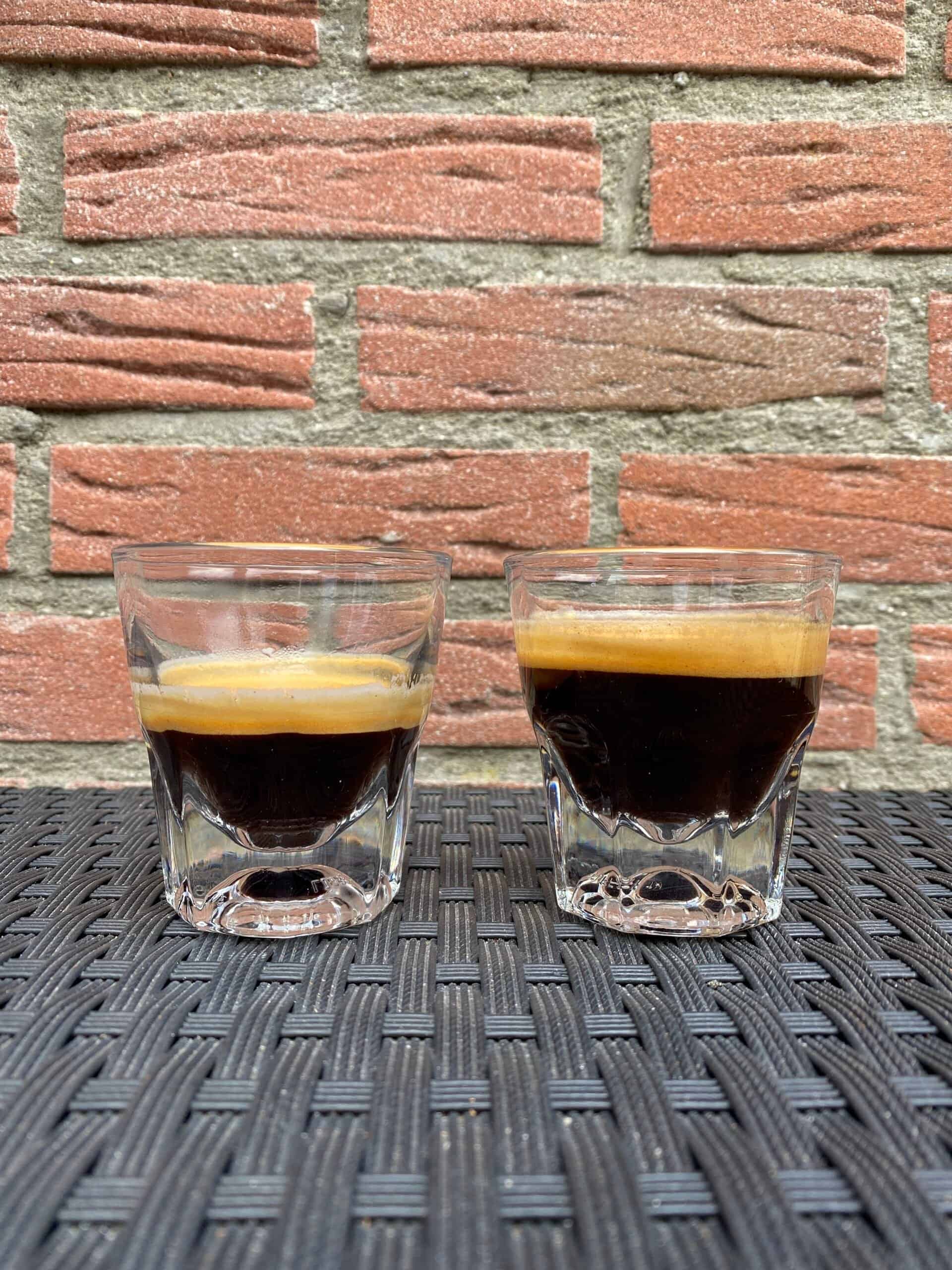
If you want to increase your caffeine intake, you can do so by using a larger basket, pulling a double shot of espresso, or using a blend with some Robusta.
Those changes move the needle far more than switching from an espresso to a lungo for increased caffeine.
Which is stronger, a lungo or an espresso?
A stronger coffee means how intense a sip of coffee tastes, and with the same dose of coffee, you'll find that an espresso is stronger in flavor because it uses less water.
The lungo is lighter in flavor because it uses more water through the puck.
You'll get a bigger cup with a cleaner feel but also a touch more roasty/bitter edge from the longer pull.

If you want the best of both worlds, you can also opt for an Americano instead. This long, clean drink maintains the espresso's balance, allowing you to savor it slowly.
Tip: Check out the easy recipe for an Americano at home here!
Which is better, a lungo or an espresso?
If you cannot decide which will fit you the best, I suggest the following, depending on what you're looking for:
Choose an espresso if you:
- Want maximum intensity per sip
- Plan to add milk (cappuccino, flat white, cortado)
- Prefer a concentrated, syrupy feel and flavor
I recommend a lungo if you:
- Want a larger cup from the same machine
- Like a lighter body and don't mind a touch more bitterness
- Prefer a straightforward, long drink with espresso character
Here's how I pick: I pull a classic espresso when I want a short, punchy shot or when I'm making milk drinks.
I go for a lungo when I'm slowly sipping coffee and want a bigger cup with a gentle, roasty edge.
FAQ's about the lungo and espresso
Is a lungo just a weak espresso?
Not exactly. It's less concentrated because you run more water through the same dose, and it pulls more roasty/bitter notes.
Which pairs better with milk?
Espresso is better suited for making milk-based drinks. Its shorter ratio gives enough intensity to punch through milk.
Can I make a lungo on a Nespresso machine?
Yes, Nespresso machines make a lungo. The Original will brew 110ml, while the Nespresso Vertuo pods will make a Gran lungo with 150ml of coffee.
Conclusion
Espresso is short and concentrated, producing a dense, sweet shot that works well straight or with milk.
Lungo uses the same dose but runs longer, resulting in a larger cup with a lighter body and a slightly roasty, more bitter edge.
Now that you know the differences between the lungo and espresso, it's time to order or make one at home.
Grab your scale, try both back to back, and let your palate pick the winner.


