

Ever wondered how hot Nespresso coffee actually gets?
I used to think Nespresso was brewed at the boiling point, but after some testing (and many cups later), I realized it's more nuanced than that.
If you're like me and care about temperature, whether it's for flavor, crema, or simply enjoying a hot cup, this one's for you.
Quick Answer: What temperature does Nespresso brew at?
Nespresso machines brew at approximately 83°C ± 3°C for Original Line models and 78°C ± 5°C for Vertuo machines.
These are the temperatures of the coffee in your cup. Inside the machine, the water typically reaches a temperature of 90°C to 96°C, at which point some heat is naturally lost.
In this article, I'll walk you through how hot Nespresso machines brew (for both Vertuo and Original models) and why they don't reach boiling.
I'll also cover how Thermoblock heating works, and what you can do if your coffee isn't quite warm enough.
Let's get into it!
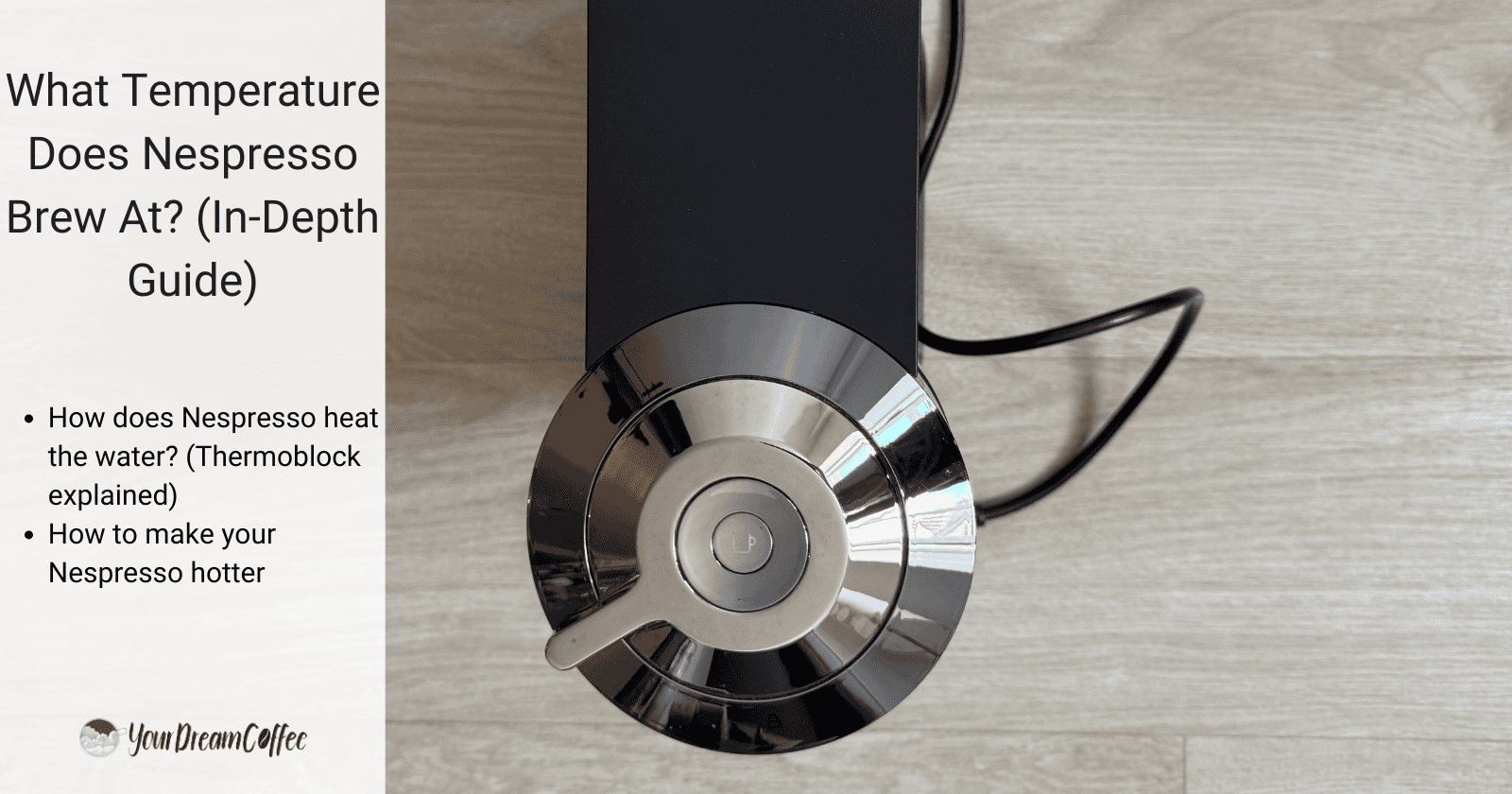
What temperature does Nespresso brew at?
According to Nespresso's official support page, the in-cup brewing temperature is:
- Original Line: 83°C ± 3°C (about 81-86°C)
- Vertuo Line temperature: 78°C ± 5°C (about 73-83°C)
These numbers reflect the temperature of the coffee in your cup, not just inside the machine.
Internally, the water reaches a temperature of roughly 90°C to 96°C, but loses heat slightly as it flows through the machine and the pod.

Further into the article, I'll cover how to keep your Nespresso coffee hot long enough to savor it slowly.
But first, let's get into some more details:
Why Nespresso doesn't brew at the boiling point
Here's the thing: brewing at 100°C (212°F) isn't ideal for the flavor of your Nespresso coffee.
It might seem hotter is better, but boiling water can actually scorch your coffee and destroy the subtle notes that make each pod unique.
Nespresso's brew temperature is carefully calibrated to match espresso standards. Here's what I recommend:
- Espresso water temperature: 90°C to 96°C (194°F to 205°F)
- Ideal drinking temperature: 65°C to 70°C (149°F to 158°F)
So, if your coffee isn't scalding, that's actually a good thing in this case. Below, I'll continue in-depth about these temperature differences:
Vertuo vs. Original: Is there any difference in temperature?
Depending on the model of Nespresso you have, you may wonder at what temperature your coffee is served.
Here's what I've found when comparing both systems:
| Nespresso system | In-cup temp (official) | Internal water temp (approx.) | Heating style |
| Original Line | 83°C ± 3°C (81-86°C) | ~90°C-95°C (194-203°F) | Thermoblock |
| Vertuo Line | 78°C ± 5°C (73-83°C) | ~90°C-96°C (194-205°F) | Thermoblock + centrifusion |
Both machines utilize a Thermoblock heating system, but Vertuo also employs spinning (called "centrifusion"), which can result in slightly more heat loss before the coffee reaches your cup.
For this machine, that is a good thing, though.
The centrifusion system allows the machine to brew a lot of different pod sizes and knows how much to brew when scanning the barcode on the back of your pod:

How does Nespresso heat water so fast? (Thermoblock explained)
Instead of using a traditional boiler, Nespresso machines use a Thermoblock system to heat water on demand.
Here's how the Thermoblock system works:
- Cold water is drawn from the tank.
- It passes through a heated metal block with embedded channels.
- As it flows through the block, it quickly reaches the target brewing temperature.
This method is fast, energy-efficient, and avoids overheating. It also allows Nespresso machines to be ready to brew in under 30 seconds, perfect for a quick shot in the morning.
The 30-second heat-up time is one of the reasons why Nespresso machines are so popular!
According to what I've read and confirmed in several manuals, the Original and Vertuo models utilize some form of Thermoblock heating, often combined with temperature sensors and safety features to maintain a precise temperature range.
Is Nespresso coffee hot enough?
For most people, the coffee from your Nespresso will be hot enough.
But I sometimes find it a little on the cooler side, especially if I forget to preheat my mug or brew a small espresso shot in a cold room.
Here are some reasons your Nespresso might feel lukewarm:
- Your mug is cold and absorbing heat.
- You're brewing a shot of espresso, which cools quickly.
- Your kitchen is chilly, speeding up heat loss.
- Your machine needs descaling (this can lower the temperature).
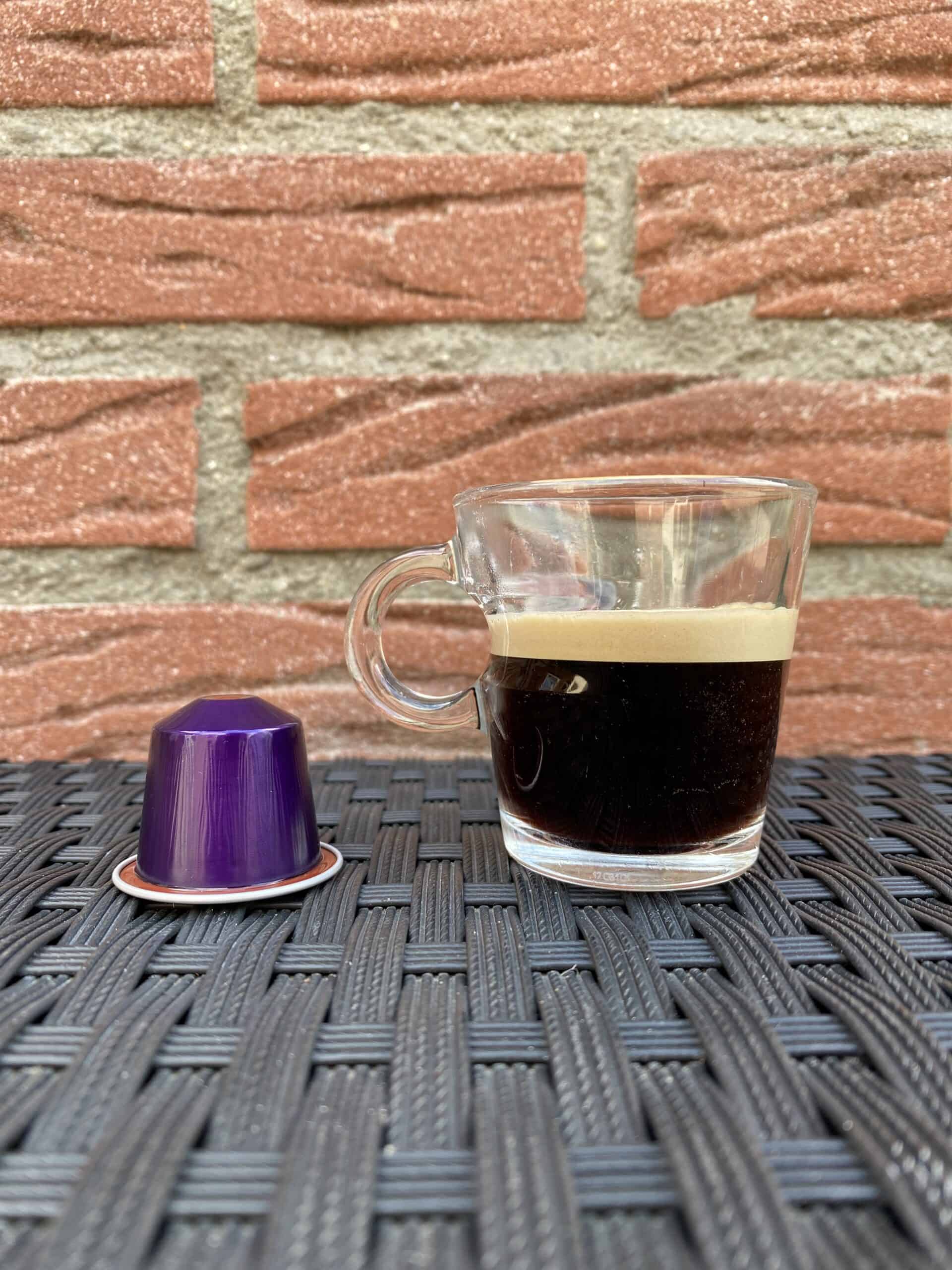
So, here's what you can do about all of these:
How to make Nespresso hotter
Over the years, I've tested a few tricks that genuinely help. If you like your coffee warmer, try this:
- Preheat your cup. I run a hot water cycle (without a pod) before brewing, which warms both the machine and the mug
- Use a rinse cycle. When I haven't used the machine in a while, I always do a rinse shot. It heats the internal parts and improves temperature consistency
- Avoid wide mugs. Narrow, insulated cups really help maintain the heat. Some double-walled glass cups are perfect for this
- Descale regularly. If it's been a while since your last descaling, your brew temperature might dip. I do it every 2-3 months
Tip: Check out my complete guide to descaling your Nespresso here!

If you have a Nespresso Vertuo machine, you won't be able to run a hot water cycle, unlike with an OriginalLine machine.
Instead, you can preheat your coffee cup with a bit of boiling water using a kettle. This will help keep your coffee warmer for longer.
Also, if your Nespresso suddenly tastes cooler than it used to, it's usually not the capsule
Use my troubleshooter below, and I'll show you the fastest checks that actually make a difference:
Conclusion
Nespresso brews at carefully tuned temperatures, around 83°C in-cup for Original and 78°C in-cup for Vertuo.
These ranges are intentionally selected and ideal for achieving the desired flavor.
They may feel a little cooler than boiling water, but that's a good thing for taste.
If you ever find your cup cooler than expected, try preheating your mug or running a rinse cycle first. That small change can make a big difference.
And be sure to descale your Nespresso machine regularly for optimal heat retention.


